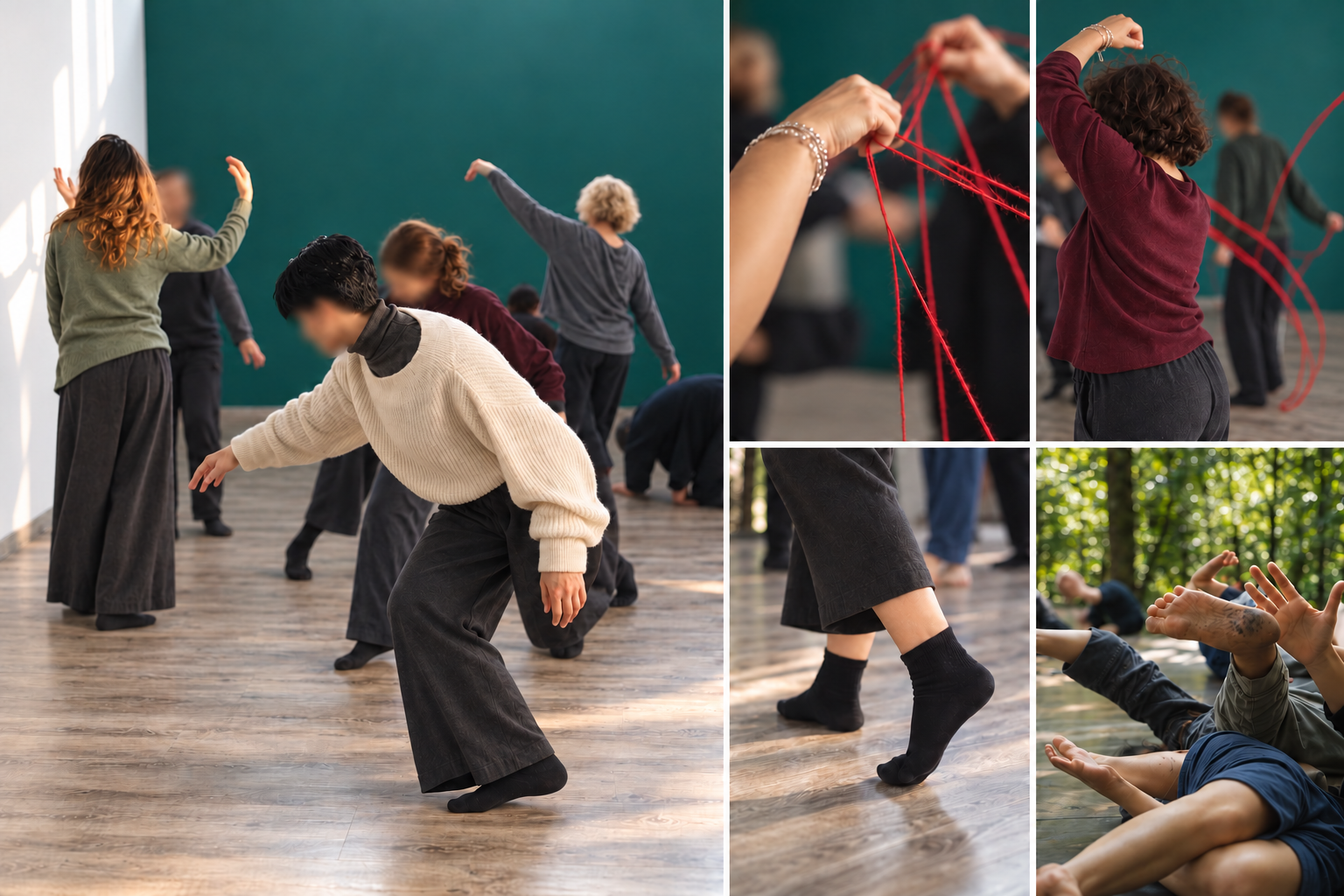
Clinical Dance Therapy is a structured therapeutic practice centred on movement and the relationship between bodily, emotional and cognitive experience. It seeks to support the alignment of body, heart and mind through creative, kinetic and somatic conduction.
“In dance, I expand and find spaces of freedom as I encounter and create new spatialities and forms.”
Foundations and training
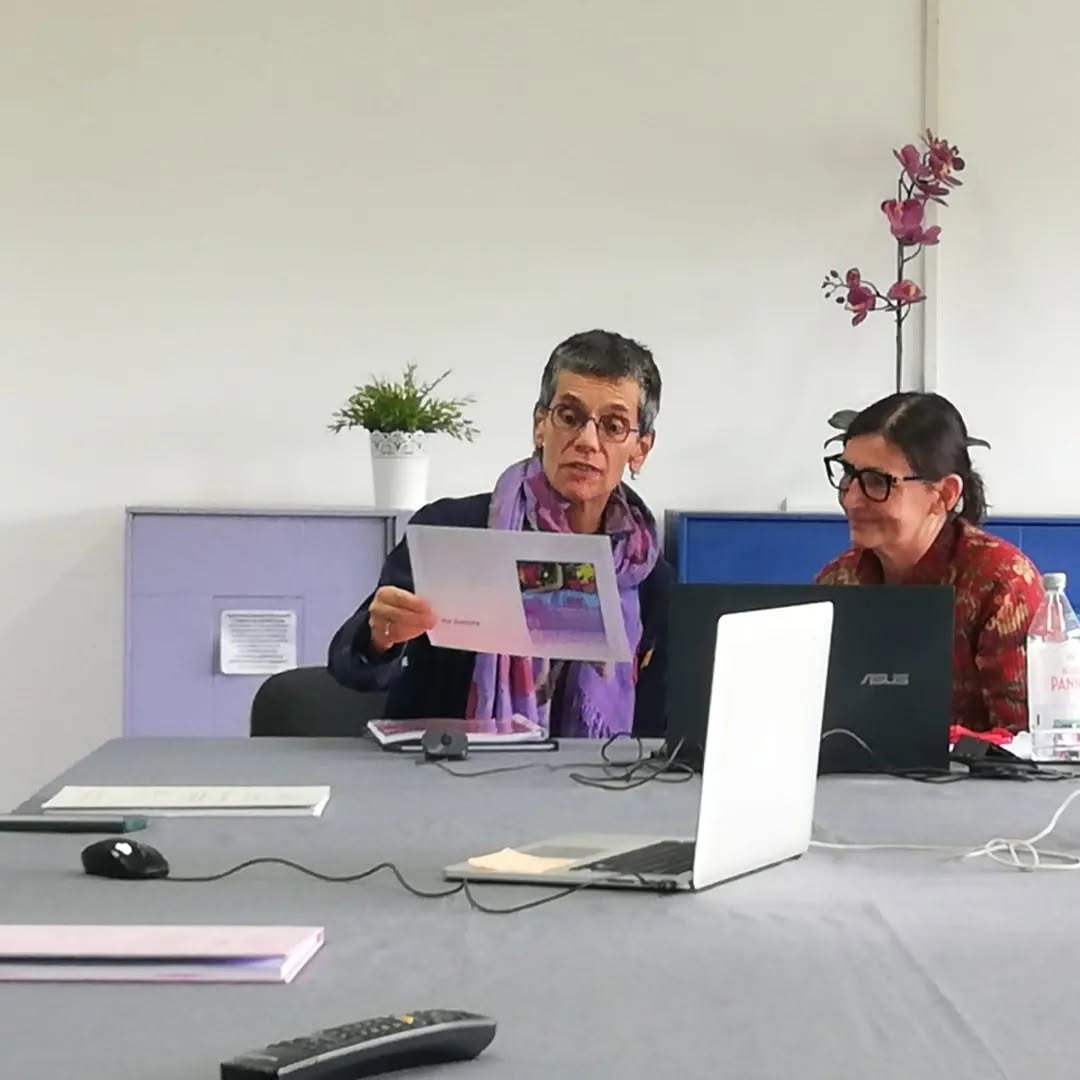
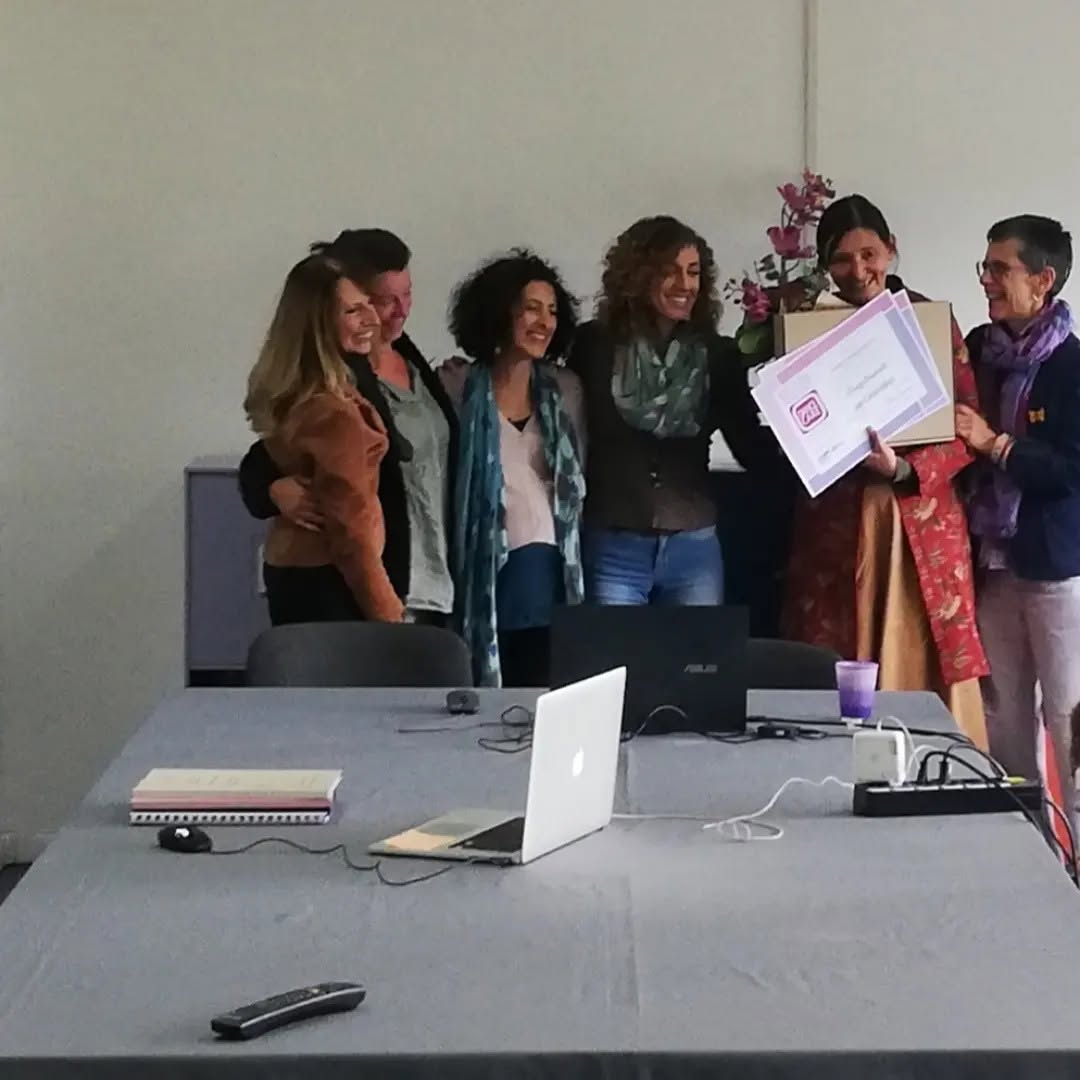
The approach draws on the work of Maria Fux and its development through Laura Pezzenati’s teaching and practice at Lyceum Academy in Milan. My training at Lyceum combined lectures with practical learning from practitioners with longstanding experience in the field. I completed my Clinical Dance Therapy diploma in 2024.
The therapeutic process
Conduction is the process through which the therapist establishes the conditions for movement. The therapist prepares the setting and introduces imaginative stimuli, objects, rhythms and gestures. These provide a framework within which each participant develops their own response.
The therapist is responsible for the preparation, pacing and closure of the session. The process remains responsive to participants’ physical capacities, energy and understanding. Each person determines how to engage with an invitation, including through observation, rest or stillness.
Movement and material exploration
Imaginative stimuli support the development of movement through images and associations. Material objects introduce qualities such as weight, texture, volume and resistance. My practice has included work with sticks, balloons and string.
Mother Words and Mother Gestures provide recurring verbal and gestural references within the conduction. An invitation may develop from the arm to the image of a wing, then explore its relationship with wind through changes in rhythm, direction and rest.
Session structure
My fieldwork sessions lasted approximately one hour and twenty minutes and followed four phases: warm-up, relaxation, conduction and return. The closing phase provided an opportunity for participants to respond through words or gesture.
The preparation of the room formed part of the practice. Desks were removed, chairs were arranged in a circle and seating remained available throughout. Attention to distance, rhythm, gaze and gesture informed the development of individual and collective movement.
Professional practice and research
My recent Clinical Dance Therapy practice includes work with migrant women in Turin and Lanzo Torinese, mother and child groups, and groups for men. This work takes place within community and care settings, including Camminare Insieme.
I bring more than thirty years of movement and performance experience to this practice, including dance, choreography and Butoh, alongside professional experience in social care and community arts.
I am also a doctoral researcher in the School of Geography at University College Dublin. My research examines embodiment, migration and access to care, with particular attention to the spatial and relational conditions through which care and wellbeing become possible.
Enquiries
For Clinical Dance Therapy projects and professional collaboration, please contact:
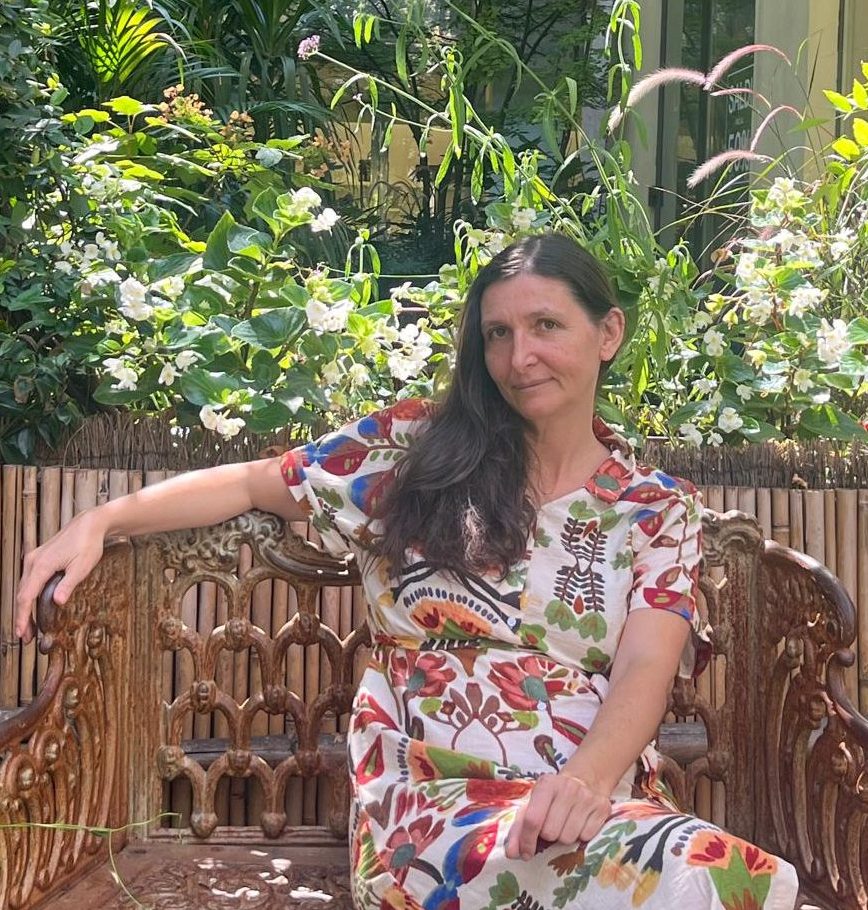
Ambra Bergamasco
ambrabergamasco@gmail.com
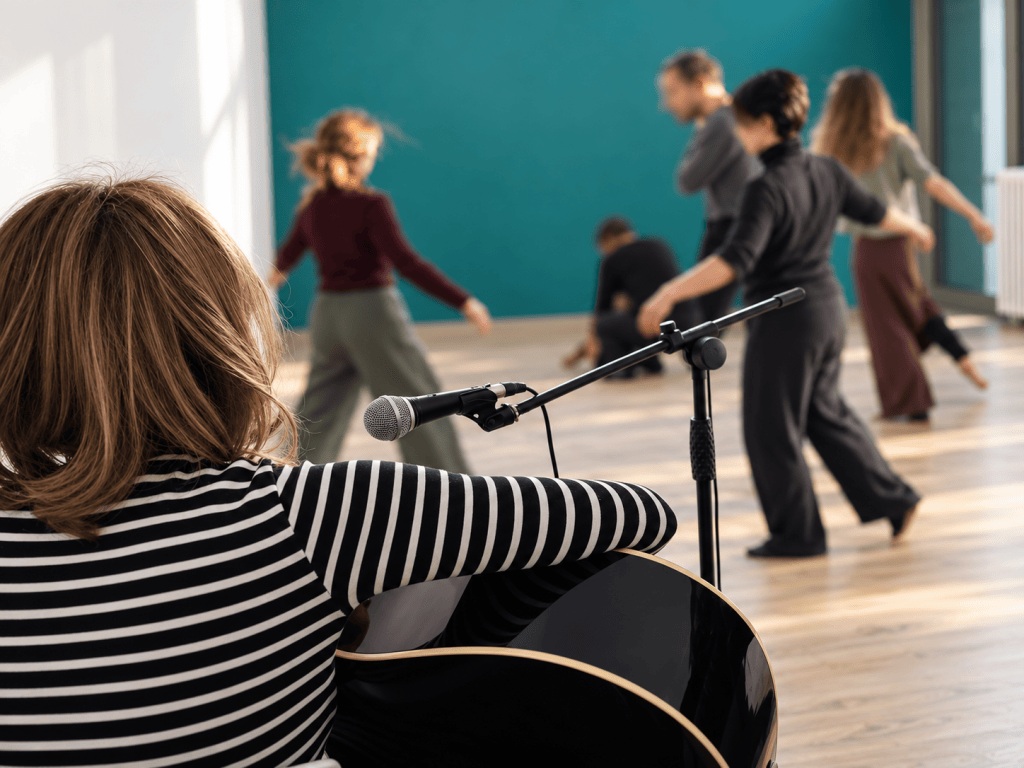
Clinical Dance Therapy and Butoh Dance with Live Music. Thank you Clarisa Bergamasco Duggan!